FREE SHIPPING 🚚 ORDERS OVER $84






















How Long Do Edible Gummies Take to Expire? Complete Shelf Life & Storage Guide (2026)

Most edible gummies stay fresh for 6 to 12 months when stored in a cool, dry, dark place in their original airtight packaging. While cannabinoids like THC and CBD gradually lose potency over time, expired gummies aren’t always unsafe. However, changes in smell, texture, color, or mold indicate they should be discarded.
Whether you’re saving your favorite THC gummies for a special occasion or wondering if an old pack of CBD gummies is still good, one question comes up often: How long do edible gummies take to expire?
The short answer is 6 to 12 months, but the real answer depends on several factors, including the ingredients, cannabinoid type, packaging, storage conditions, and exposure to heat, light, air, and moisture.
Unlike dried cannabis flower, edible gummies combine cannabinoids with food ingredients. This means there are two things aging simultaneously:
- The gummy itself, which can dry out, become sticky, or develop mold.
- The cannabinoids, such as THC or CBD, which naturally degrade over time and gradually lose potency.
Understanding the difference between food spoilage and cannabinoid degradation is essential. A gummy might still look perfectly edible while delivering noticeably weaker effects, or it could become unsafe because of microbial growth—even if some cannabinoids remain active.
In this guide, we’ll explain everything you need to know about edible gummy shelf life, proper storage, potency loss, expiration signs, and how to maximize freshness so every gummy delivers the best possible experience.
Do Edible Gummies Expire?
Yes. All edible gummies eventually expire.
Whether they’re infused with THC, CBD, Delta 8, Delta 9, CBN, or other hemp-derived cannabinoids, gummies have a limited shelf life because they contain food ingredients that naturally change over time.
Expiration doesn’t always mean the product suddenly becomes dangerous on a specific date. Instead, expiration is a gradual process involving two separate changes:
1. The Food Ingredients Begin to Age
The gummy base contains ingredients such as:
- Sugar
- Gelatin or pectin
- Fruit flavors
- Natural colors
- Acids like citric acid
- Water
Over time, these ingredients may:
- Dry out
- Become sticky
- Lose flavor
- Change texture
- Develop mold if exposed to moisture
2. Cannabinoids Slowly Lose Potency
At the same time, active cannabinoids begin degrading.
For example:
- THC slowly oxidizes into other cannabinoids.
- CBD gradually becomes less potent.
- Terpenes responsible for aroma and flavor evaporate.
- Minor cannabinoids become less effective with prolonged exposure to heat, oxygen, and UV light.
This means an expired gummy may still be safe to eat but deliver a much weaker experience than it did when it was fresh.
Understanding this distinction helps consumers avoid unnecessary waste while also recognizing when a product should no longer be consumed.
How Long Do Edible Gummies Last?
Although manufacturers provide expiration dates on the packaging, most commercially produced edible gummies remain at their best for 6 to 12 months when stored correctly.
Here’s a general guideline:
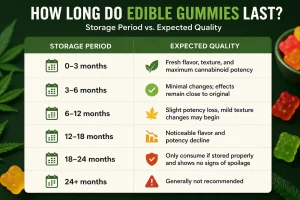
Keep in mind that these timelines assume proper storage. Heat, humidity, and repeated exposure to air can shorten shelf life considerably.
Why Some Gummies Last Longer Than Others
Not every edible gummy ages at the same rate.
Several factors determine how quickly a product expires.
Ingredients
Natural ingredients often have shorter shelf lives than products containing approved food preservatives.
Moisture Content
Higher moisture levels increase the risk of microbial growth and mold.
Packaging
Vacuum-sealed, airtight containers protect gummies significantly better than loosely sealed bags.
Manufacturing Standards
Professionally manufactured gummies typically undergo stability testing and use controlled formulations that help maintain freshness longer than homemade edibles.
Shelf Life by Gummy Type: Do Different Edible Gummies Expire at Different Rates?
Although most cannabis and hemp-derived gummies have a similar shelf life, the type of cannabinoid, manufacturing process, ingredients, and storage conditions can slightly influence how long they stay fresh and effective.
Whether you prefer Delta 8 Gummies, Delta 9 Gummies, Delta 10 Gummies, or CBD Gummies, understanding their expected shelf life helps you enjoy the best flavor, texture, and cannabinoid potency while minimizing waste.
The table below provides a general guideline for commercially manufactured gummies stored in their original, unopened packaging.
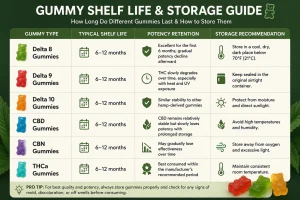
Pro Tip: Always check the manufacturer’s expiration or “Best By” date first. Even if two products contain the same cannabinoid, differences in ingredients, preservatives, and packaging can significantly affect shelf life.
Do Delta 8 Gummies Expire Faster Than Delta 9 Gummies?
One of the most common questions consumers ask is whether Delta 8 Gummies expire faster than Delta 9 Gummies.
The answer is not usually.
Both cannabinoids belong to the THC family and have very similar chemical structures, meaning they respond similarly to environmental factors such as oxygen, heat, moisture, and ultraviolet (UV) light. When stored properly, both products generally remain fresh for 6 to 12 months.

The biggest difference isn’t the cannabinoid itself—it’s the product formulation.
For example, gummies made with natural fruit juice, organic flavorings, or fewer preservatives may have a shorter shelf life than products formulated with food-grade stabilizers. Likewise, improper storage, such as leaving gummies in a hot car or exposing them to humidity, can shorten shelf life regardless of whether they contain Delta 8 or Delta 9.
If you’re buying premium hemp-derived gummies, always follow the storage instructions on the label to preserve both freshness and potency.
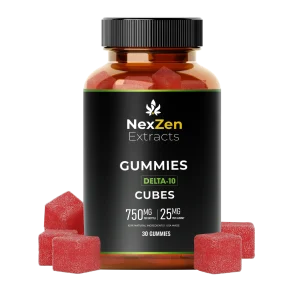
Do Delta 10 Gummies Expire Differently?
Like other hemp-derived cannabinoids, Delta 10 Gummies naturally lose potency over time, but they don’t expire significantly faster than Delta 8 or Delta 9 products.
Under normal storage conditions, commercially produced Delta 10 Gummies typically remain fresh for 6 to 12 months.
However, because Delta 10 formulations often contain blends of multiple cannabinoids and botanical terpenes, prolonged exposure to heat or sunlight may cause flavor and aroma to diminish before the expiration date.
To maximize shelf life:
- Keep gummies inside their original airtight packaging.
- Avoid exposing them to direct sunlight.
- Store them in a cool, dry cabinet rather than a refrigerator door or windowsill.
- Minimize opening the container unnecessarily to reduce oxygen exposure.
Following these simple practices helps preserve both cannabinoid content and the overall quality of the gummies.
How Long Do CBD Gummies Stay Fresh?
Although CBD Gummies don’t produce intoxicating effects like THC-infused products, they still contain active cannabinoids that gradually degrade over time.
Most commercially manufactured CBD Gummies maintain their best quality for 6 to 12 months after production when stored correctly.
Over time, you may notice:
- Slightly reduced CBD potency.
- Less vibrant fruit flavors.
- Firmer or drier texture.
- Fading color due to natural ingredient oxidation.
Unlike spoilage caused by mold or bacteria, these gradual changes don’t necessarily make the gummies unsafe. Instead, they indicate that the product may not deliver the same effectiveness or sensory experience as when it was fresh.
For the best results, consume CBD Gummies before their expiration date and always store them away from excessive heat, humidity, and direct sunlight.
What Happens to THC, CBD, and Other Cannabinoids as Gummies Age?
When people ask, “How long do edible gummies take to expire?”, they’re usually thinking about whether the gummies are still safe to eat. However, there’s another important factor to consider: cannabinoid degradation.
Even if your gummies look, smell, and taste perfectly fine, the active compounds inside them gradually break down over time. This means older gummies may not deliver the same experience they did when they were fresh.
Whether you’re enjoying Delta 8 Gummies, Delta 9 Gummies, Delta 10 Gummies, or CBD Gummies, the cannabinoids naturally begin to lose potency from the day they’re manufactured. While proper storage can slow this process, it cannot stop it entirely.
Understanding how cannabinoids age helps you know what to expect from older edible products.
THC Gradually Loses Potency
THC is sensitive to environmental conditions such as heat, oxygen, moisture, and ultraviolet (UV) light. Over time, these elements slowly break down the cannabinoid, reducing its effectiveness.
For example, if a package of Delta 9 Gummies is left inside a hot car during summer or stored near a sunny window, the THC may degrade much faster than if it were kept in a cool, dark cupboard.
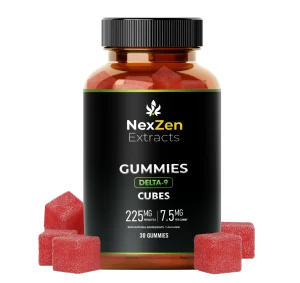
As THC potency decreases, consumers may notice:
- Milder effects than expected.
- Longer onset time.
- Less consistent experiences.
- Reduced overall effectiveness.
This gradual decline is completely normal and happens even in professionally manufactured gummies.
Does THC Turn Into CBN?
One of the most common myths is that old THC gummies somehow become stronger over time.
In reality, the opposite is true.
As THC ages, a portion of it slowly oxidizes and converts into other cannabinoids, including CBN (Cannabinol). CBN is often associated with relaxing properties, but it is significantly less psychoactive than THC.
This means expired or poorly stored gummies generally become less potent, not more potent.
It’s important to remember that this conversion happens gradually over months—not overnight—and proper storage helps slow the process.
What Happens to CBD as It Ages?
Like THC, CBD also becomes less stable over time.
Although CBD Gummies don’t produce intoxicating effects, the cannabidiol inside them gradually loses strength when exposed to unfavorable conditions.
As CBD degrades, users may notice:
- Reduced effectiveness.
- Less noticeable wellness benefits.
- Slight changes in flavor.
- Minor color changes caused by oxidation.
Fortunately, CBD is relatively stable when stored correctly, which is why most commercial CBD Gummies remain effective throughout their recommended shelf life.
Do Delta 8 Gummies and Delta 10 Gummies Degrade Differently?
Chemically, Delta 8 Gummies and Delta 10 Gummies behave very similarly to other hemp-derived cannabinoids.
Both compounds are sensitive to:
- Oxygen exposure.
- Heat.
- Direct sunlight.
- Humidity.
- Frequent temperature fluctuations.
When stored properly, neither cannabinoid degrades significantly faster than the other. Instead, shelf life is usually determined by the gummy formulation, ingredient quality, packaging, and storage conditions rather than the cannabinoid itself.
This is why manufacturers recommend keeping all cannabinoid-infused gummies sealed and protected from environmental exposure.
Why Terpenes Matter Too
Many premium edible gummies include naturally occurring terpenes to enhance flavor and complement the cannabinoid profile.
Terpenes are highly aromatic compounds found in hemp and many other plants. They contribute to the fruity, citrusy, earthy, or herbal flavors consumers enjoy in high-quality gummies.
However, terpenes are even more sensitive than cannabinoids.
Exposure to:
- Heat
- Air
- UV light
- Humidity
can cause terpenes to evaporate or degrade over time.
As a result, older gummies may still contain active cannabinoids but lose much of their original aroma and flavor profile. If you’ve ever opened an older package of gummies and noticed they smelled less vibrant than before, terpene degradation is often the reason.
Potency Loss Doesn’t Always Mean the Gummies Are Unsafe
One of the biggest misconceptions about expired edibles is that weaker potency automatically means they’re unsafe to consume.
That’s not necessarily true.
A gummy can lose a noticeable amount of cannabinoid strength while remaining perfectly safe if it has been stored correctly and shows no signs of spoilage.
However, if you notice any of the following, it’s best to discard the product:
- Mold or fuzzy growth.
- An unusual or sour odor.
- Excessive stickiness or moisture.
- Cracks, discoloration, or texture changes.
- An off or unpleasant taste.
The safest approach is to evaluate both potency and food quality before consuming older edible gummies.
Potency Loss vs. Food Safety: Can You Eat Expired Edible Gummies?
One of the biggest misconceptions about edible gummies is that an expiration date automatically means they’re unsafe to consume. In reality, potency loss and food spoilage are two completely different things.
Whether you have Delta 8 Gummies, Delta 9 Gummies, Delta 10 Gummies, or CBD Gummies, an expired product may simply deliver weaker effects rather than posing an immediate health risk. However, if the gummy itself has spoiled, consuming it could lead to digestive discomfort or foodborne illness.
Understanding this distinction helps you decide whether an older package is still worth keeping—or if it’s time to throw it away.
Potency Loss: Your Gummies Become Less Effective
Over time, cannabinoids naturally break down, even when gummies are stored correctly.
As a result, older gummies may:
- Produce milder effects than expected.
- Require a higher serving to achieve similar results.
- Take longer to produce noticeable effects.
- Lose some of their original flavor and aroma.
This gradual decline doesn’t necessarily mean the gummies are unsafe—it simply means they’re no longer at peak quality.
For example, a package of Delta 9 Gummies that’s ten months old and stored properly may still be perfectly edible, but the THC content may no longer deliver the same experience as it did when freshly manufactured.
The same applies to Delta 8 Gummies, Delta 10 Gummies, and CBD Gummies, all of which naturally lose potency over time.
Food Spoilage: When Gummies Become Unsafe
Unlike potency loss, food spoilage is a genuine safety concern.
Edible gummies contain food ingredients that can eventually deteriorate, especially if exposed to heat, moisture, or air.
Discard your gummies immediately if you notice:
- Visible mold or fuzzy spots.
- Sour, fermented, or unpleasant odors.
- Excessive moisture inside the container.
- Sticky residue that wasn’t present originally.
- Significant color changes.
- Crumbling, cracking, or an unusually hard texture.
- An off or bitter taste.
If any of these warning signs appear, it’s safest not to consume the product—even if the expiration date hasn’t passed.
Quick Comparison: Potency Loss vs. Spoilage
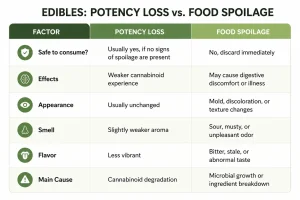
This distinction is especially helpful because many consumers assume weaker gummies are automatically unsafe—which isn’t always the case.
Can Expired Gummies Make You Sick?
It depends on why they’re expired.
If your gummies have simply lost potency but remain clean, dry, and free of spoilage, they’re unlikely to cause health problems. You may simply experience reduced effects.
However, gummies that have developed mold, bacterial contamination, or ingredient spoilage can potentially cause symptoms such as:
- Nausea
- Upset stomach
- Vomiting
- Diarrhea
- Stomach cramps
Individuals with weakened immune systems, food allergies, or underlying health conditions should be especially cautious and avoid consuming questionable edible products.
When in doubt, it’s always safer to replace an old package than to take the risk.
Is It Safe to Eat Gummies After the Expiration Date?
A “Best By” or expiration date should be viewed as a quality guideline rather than an exact safety deadline.
If your edible gummies are only a few weeks past the printed date and have been stored correctly in a cool, dry place, they may still be safe to consume. However, they may not provide the same flavor, texture, or cannabinoid potency.
Before deciding to eat older gummies, perform a simple inspection:
✔ Check for mold or discoloration.
✔ Smell the gummies for any sour or unusual odors.
✔ Feel the texture—it should still be soft and chewy.
✔ Confirm the packaging hasn’t been damaged or exposed to excessive heat.
If anything seems unusual, it’s best to dispose of the product.
Can Homemade Gummies Expire Faster Than Store-Bought Gummies?
Yes. Homemade edible gummies generally have a much shorter shelf life because they often lack the preservatives, controlled manufacturing processes, and protective packaging used for commercial products.
Here’s a quick comparison:
| Product Type | Average Shelf Life |
|---|---|
| Homemade edible gummies | 2–4 weeks (refrigerated) |
| Commercial edible gummies | 6–12 months |
| Vacuum-sealed commercial gummies | Up to 12 months or longer if stored correctly |
If you’ve made your own infused gummies at home, refrigerate them promptly and consume them within a few weeks for the best quality and safety.
When Should You Throw Edible Gummies Away?
Even if your gummies haven’t reached their expiration date, it’s time to discard them if you notice any of the following:
- Visible mold or mildew.
- Strong sour or fermented smell.
- Sticky liquid leaking inside the container.
- Packaging that has been damaged or left open for an extended period.
- Exposure to extreme heat, such as being left inside a car during summer.
- Significant changes in taste, color, or texture.
Replacing a questionable package is always the safer choice than risking foodborne illness.
Expert Tip: Trust Your Senses
When it comes to edible gummies, your senses are often your best quality-control tool.
If something looks unusual, smells unpleasant, or tastes different than expected, it’s better to err on the side of caution.
This applies equally to Delta 8 Gummies, Delta 9 Gummies, Delta 10 Gummies, and CBD Gummies. While these products can remain fresh for many months with proper storage, no gummy lasts forever. A quick visual and sensory inspection before consumption can help ensure both safety and the best possible experience.
Frequently Asked Questions
1. Can expired Delta 8 Gummies still get you high?
Yes, expired Delta 8 Gummies may still produce effects if they’ve been stored properly and haven’t spoiled. However, THC potency gradually decreases over time due to exposure to oxygen, heat, and light. As a result, older gummies may feel noticeably weaker than when they were fresh. Always inspect the product for signs of spoilage before consuming it.
2. Should you refrigerate Delta 9 Gummies and CBD Gummies?
Refrigeration isn’t always necessary, but it can help in hot or humid climates. Delta 9 Gummies and CBD Gummies are best stored in a cool, dry place away from direct sunlight. If you choose to refrigerate them, keep them in an airtight container to prevent moisture buildup and preserve their texture and potency.
3. Do Delta 10 Gummies expire faster than other edible gummies?
No. Delta 10 Gummies generally have a similar shelf life to Delta 8, Delta 9, and CBD gummies—typically 6 to 12 months when stored correctly. Their longevity depends more on ingredient quality, packaging, and storage conditions than on the cannabinoid itself.
4. How can you make edible gummies last longer?
To maximize the shelf life of edible gummies, store them in their original airtight container in a cool, dark, and dry location. Avoid exposing Delta 8 Gummies, Delta 9 Gummies, Delta 10 Gummies, or CBD Gummies to excessive heat, humidity, or direct sunlight. Proper storage helps preserve both freshness and cannabinoid potency for as long as possible.
Editorial Note
The information in this guide is intended for educational purposes and is based on current industry best practices, manufacturer storage recommendations, food safety principles, and established knowledge about cannabinoid stability. Because edible gummy formulations vary by brand, ingredients, preservatives, packaging, and cannabinoid content, actual shelf life may differ from one product to another.
For the most accurate guidance, always follow the storage instructions and expiration date provided by the manufacturer. If your edible gummies show signs of mold, unusual odors, discoloration, or significant texture changes, they should be discarded regardless of the printed expiration date. When in doubt, prioritize safety and replace older products rather than consuming questionable edibles.


